Hallyu Expo Drives Korean Dreams in America
The Korean Wave Transforms the American Dream Mall
On the 7th, local time, the main plaza of the American Dream Mall in New Jersey, U.S., was filled with the aroma of ramen. This was due to people using a ramen instant-cooking device called the ‘Han River Ramen Machine,’ installed in one corner of the plaza. The American Dream Mall, known as the second-largest shopping center in the U.S., transformed into a ‘K-Culture’ shopping center during the three-day ‘2025 New York Hallyu (Korean Wave) Expo’ hosted by the Korea Trade-Investment Promotion Agency (KOTRA).
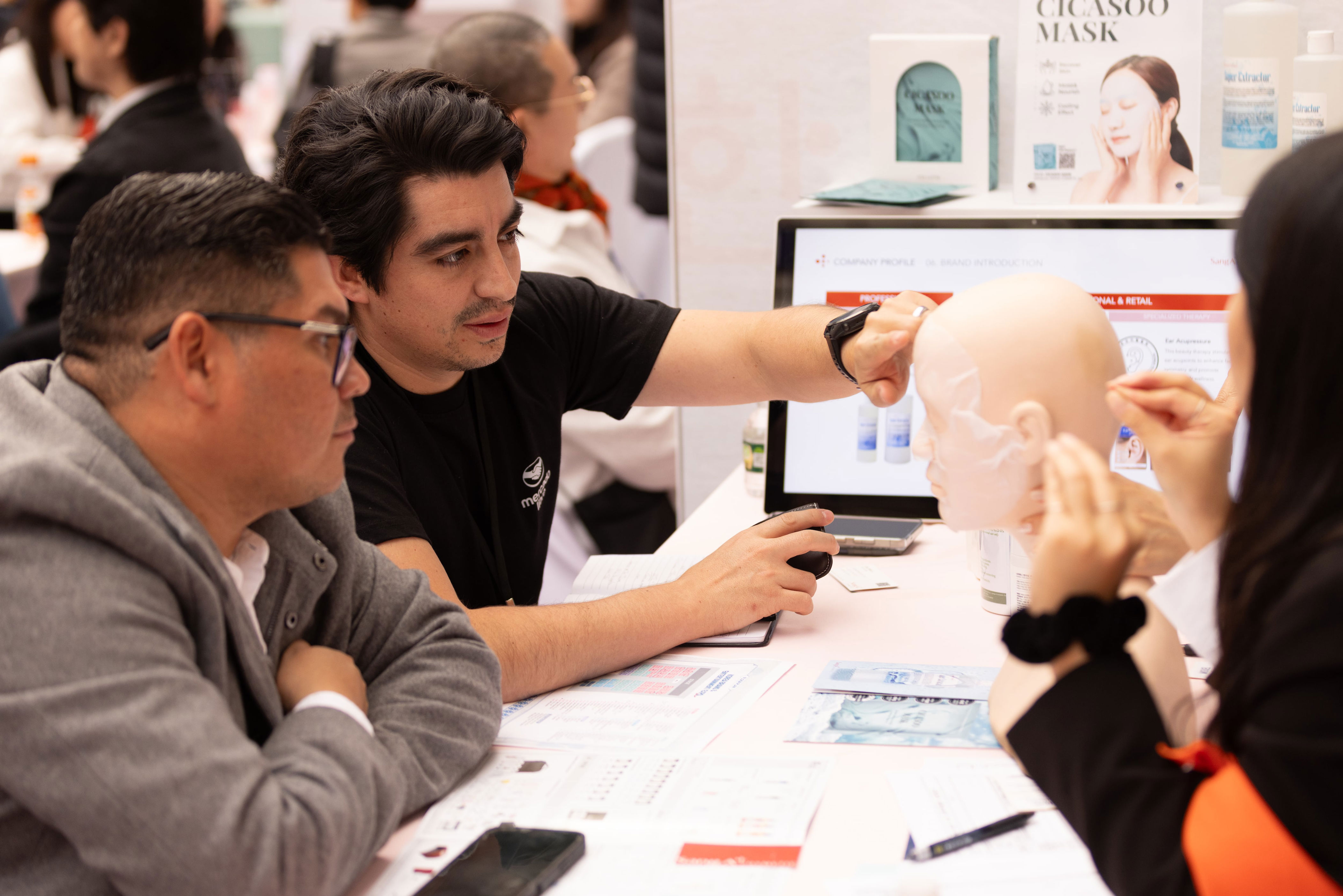
Melanie, 39, a New Jersey resident met at the New York Hallyu (Korean Wave) Expo site, said, “My elementary school daughter fell in love with Korean ramen cooked in an instant machine after attending a friend’s birthday party at a ‘Korean Ramen Convenience Store.’ My eldest daughter has become an expert who has attended K-pop concerts for several years, and recently, people around us, including my family, all enjoy Korean food, dramas, etc., on a daily basis.”
In front of the booth of the Korean small and medium-sized enterprise ‘Beomil Industry,’ which promotes the Han River Ramen Machine, locals skillfully selected and boiled their preferred ramen and ate it with chopsticks. “I work at an elementary school, and it’s common for kids to sing the theme song from ‘KPop Demon Hunters’ and play ‘Red Light, Green Light’ from ‘Squid Game.’ If you come to our school, you’ll realize how popular Korean culture is.”
The Hallyu (Korean Wave) Expo Achieves ‘American Dream’ After 15 Years
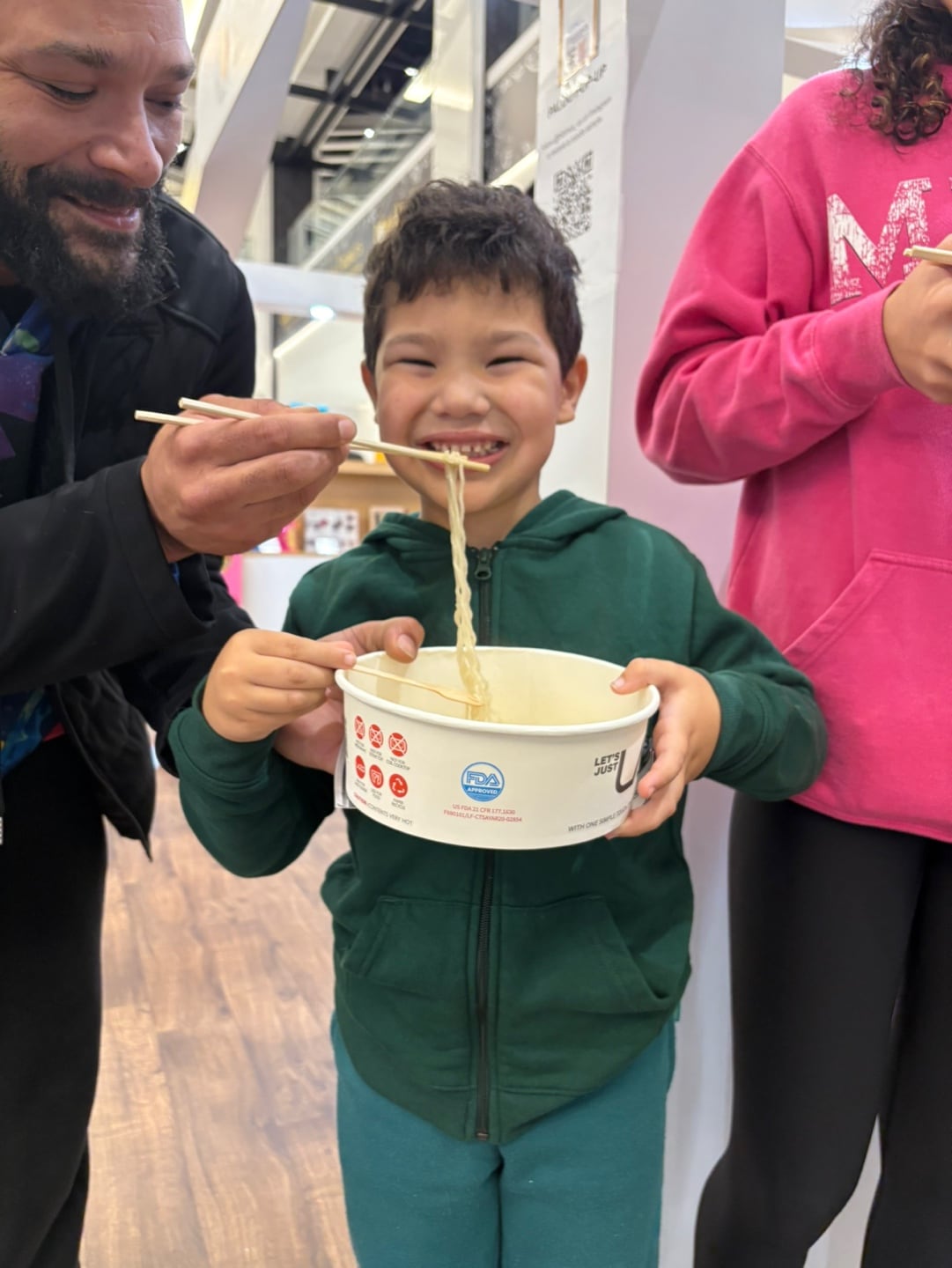
KOTRA’s Hallyu (Korean Wave) Expo is an export fair held to promote Korean small and medium-sized enterprises’ consumer goods overseas and open export channels by leveraging the popularity of K-Culture. The event, held alongside K-pop performances, has been hosted more than once a year in various countries worldwide since 2010, totaling 24 times. However, this ‘2025 New York Hallyu (Korean Wave) Expo’ marks the first time it has been held in North America. This is because, compared to private K-pop export expos, the budget was limited, and it was difficult to gather local ‘buyers’ in advanced countries like the U.S.
Kang Kyung-sung, KOTRA president, said, “Large cities like New York in the U.S. incur high event costs, and it was challenging to gather large buyers in one place and close export contracts, making it difficult to take the plunge. However, with the recent rise in K-Culture popularity in the U.S., we gained confidence to host the event there.”
In fact, 235 local buyer companies (185 from North America and 50 from Central and South America) participated in the business-to-business (B2B) event of the ‘New York Hallyu (Korean Wave) Expo’ held on the 6th–7th, conducting a total of 1,390 export consultations with 100 Korean consumer goods companies. Various Korean food products and items, such as instant ramen cookers, Korean-grown Shine Muscat grapes and Wando abalone, and Pororo toys, caught the buyers’ attention.
Over two days starting on the 7th, 20,000 ‘K-Culture’ fans, including those who flew in from nearby New Jersey, visited the general public expo. They participated in a ‘Yutnori event’ at the booth of the Hallyu (Korean Wave) direct-purchase company ‘K-Town4U’ and rejoiced in receiving K-pop photo cards and posters as prizes. As children began performing cover dances to songs by idols ‘aespa’ and ‘KATSEYE,’ people quickly gathered around the plaza, cheering them on.
Brenda, 26, and Ash, 27, said, “We came from Louisiana, a three-hour drive, to watch performances and enjoy Korean-style shopping. Recently, several Korean-style convenience stores and restaurants have opened in our neighborhood, and we regularly enjoy instant tteokbokki heated in microwaves and Korean convenience store takeout beverages.” At the event site of ‘Wool-Tari Mall,’ a famous K-Food online mall in the U.S., people crowded to taste yakgwa and baram-tteok and receive Shin Ramyun featuring ‘KPop Demon Hunters’ illustrations as prizes.
North America Emerges as the Largest Export Market for Consumer Goods
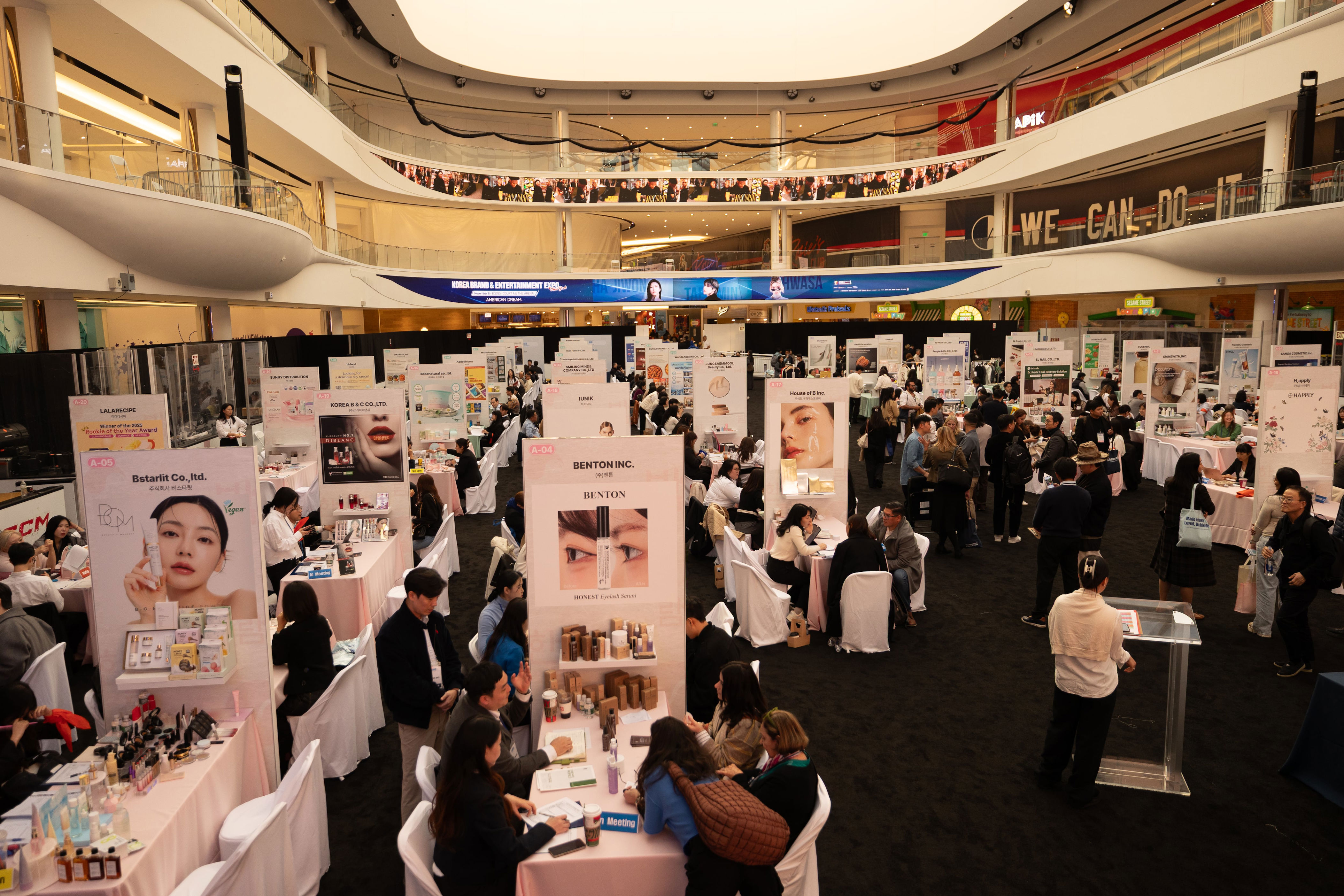
The ‘American Dream’ of K-Food, beauty, and fashion companies is reflected in export performance. Domestic companies, feeling the limitations of the domestic market and uncertainties in the Chinese market, have launched a full-scale offensive in the U.S. market, and the K-Wave has also spread in North America following the COVID-19 pandemic.
Kim Sook-young, professor at UCLA’s School of Theater, Film, and Television, cited the Oscar win of ‘Parasite’ in 2019, the global success of BTS and ‘Squid Game’ in 2021, and the surge of the Netflix animation “KPop Demon Hunters” this year as momentum for Hallyu (Korean Wave) growth in the U.S. She added, “Recently, all ‘lifestyles’ of Koreans—what they eat, apply, and wear—have started gaining attention in the U.S.”
The North American market accounted for 26.5% of total consumer goods exports last year, surpassing China to become the largest export market. According to the Korea International Trade Association, exports of Korea’s four major consumer goods categories (cosmetics, fashion apparel, household and infant products, and agricultural and fishery foods) to North America increased by 178%, from $380 million in 2020 to $660 million last year. Notably, cosmetics exports recorded explosive growth of nearly 300%, rising from $690 million to $2.02 billion during the same period.
A source from H Mart, a Korean supermarket that recently succeeded in opening its 100th branch in the U.S., said, “Korean content has now deeply rooted in the daily lives of Americans, backed by large platforms like Netflix and TikTok. Interest is gradually expanding beyond Korean food, restaurants, and cosmetics to Korean-style fashion accessories, cute stationery and toys, and interior items that can create a Korean mood.” H Mart is also expanding to areas with few Korean residents, such as Orlando, Florida, as local demand for ‘K-Culture’ consumption increases.
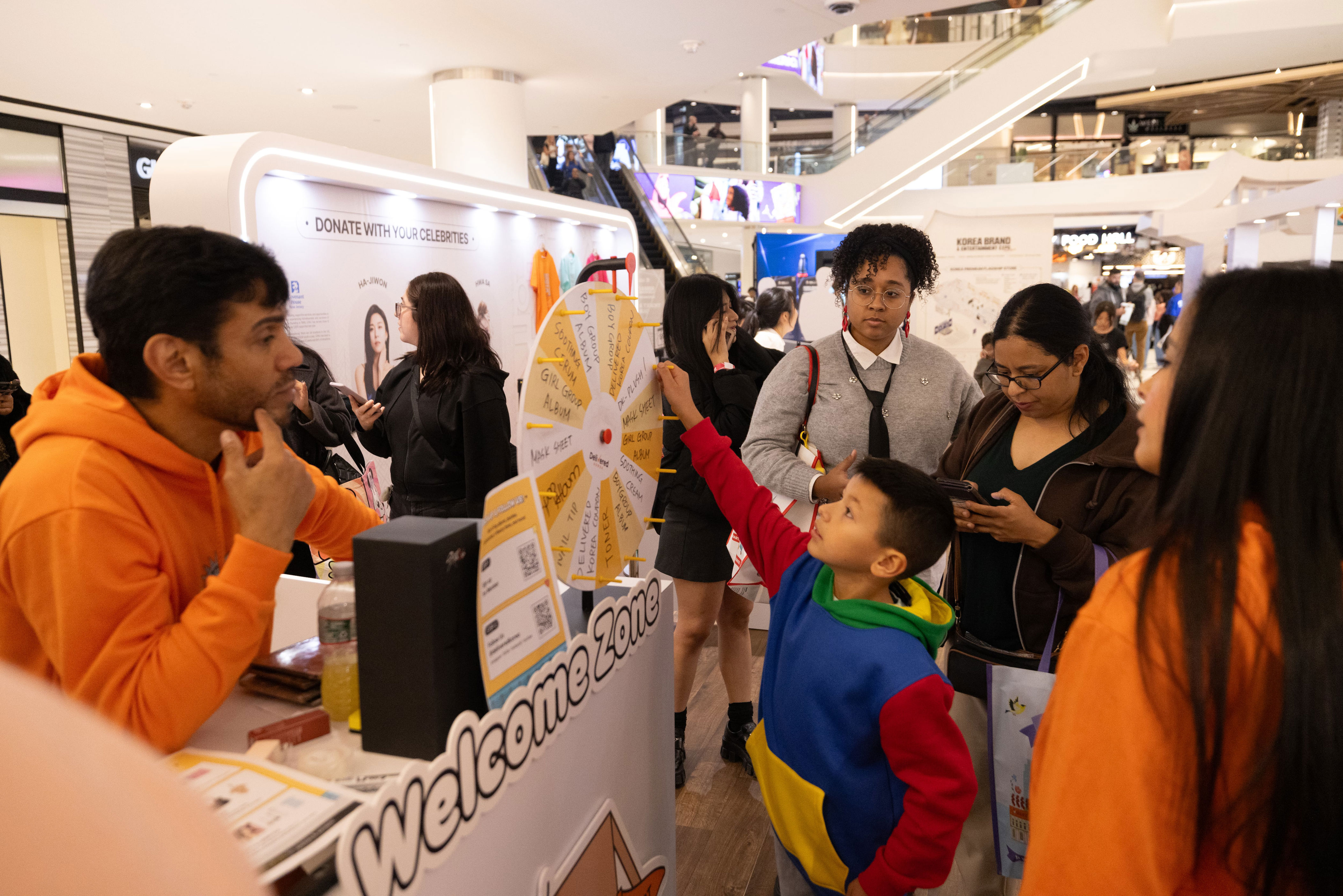
A representative from ‘Farmacias Simi,’ Mexico’s equivalent of ‘Olive Young,’ who visited the event, said, “Following the COVID-19 pandemic, the fashion and skincare of K-pop singers and Korean actors have established themselves as ‘global trends’ that people want to follow, even if they are slightly expensive. There is particularly high interest in Korea’s latest beauty trends, such as edible collagen and skincare utilizing glutathione and PDRN.”
The Ministry of Trade, Industry and Resources and KOTRA plan to continue encouraging overseas expansion of domestic small and medium-sized consumer goods companies by leveraging Hallyu (Korean Wave) and other factors. Kang Kyung-sung, KOTRA president, said, “This year, we plan to host the Hallyu (Korean Wave) Expo a total of four times, including in Kuala Lumpur, Malaysia, in December. We will fully support connecting the Hallyu (Korean Wave) craze to consumer goods from small and medium-sized enterprises.”

Post a Comment for "Hallyu Expo Drives Korean Dreams in America"