EU squares up to US with deregulation, clean tech push
European Commission President Von der Leyen is rebranding her groundbreaking climate regulations as a way to strengthen Europe's economic prospects, simplifying bureaucratic procedures and alienating environmental activists in the process.
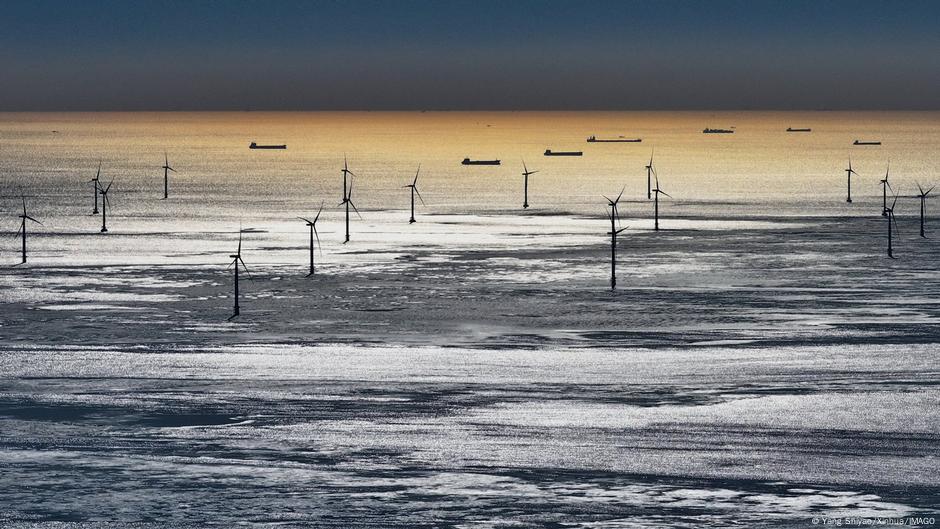
European Commission President Ursula Von der Leyen's first term in office, spanning from 2019 to 2024, was marked by a significant wave of regulations. Through her landmark European Green Deal, she introduced legislation across multiple sectors to put the European Union on track to achieve "net zero" emissions by 2050 and mitigate the risk of a catastrophic climate disaster.
The head of the European Union's executive body is pushing for deregulation to level the playing field for European businesses in competition with their US and Chinese counterparts, all while maintaining the union's ambitious climate objectives.
Advocates, and even some industry voices.
In clean industrial technologies, also aimed at boosting European Union competitiveness.
What exactly is the European Commission proposing?
It is essential for EU companies to follow sustainability impact reporting and supply chain responsibility, which are already incorporated into existing legislation. The EU's executive branch specifically aims to ease the burden on small- and medium-sized enterprises.
The changes will exempt around 80% of companies currently subject to the corporate sustainability reporting directive: all those with fewer than 1,000 employees. They will no longer have to comply with the strict annual reporting requirements specified by the law.
The plans will also postpone the enforcement of a due diligence law until 2028, easing the pressure on companies to verify their indirect suppliers' adherence to environmental and human rights standards.
The European Union's executive branch is working to reduce the administrative burden on businesses. They hope to achieve a 25% reduction by 2029 and a 35% reduction for smaller businesses. This goal is expected to result in annual savings of €6 billion in administrative costs.
In a similar effort, the European Commission is promoting a plan to secure €100 billion in public and private investment to reduce greenhouse gas emissions from heavy industry and manufacturing sectors, such as steel, and to boost renewable energy production. One key objective is to lower energy costs for European businesses and households.
Why is Ursula von der Leyen taking this action at this time?
The proposals announced on Wednesday have their roots in European Commission President von der Leyen's main priority for her 2024-2029 term: increasing competitiveness. EU officials have been cautioned for years that the bloc is losing its economic advantage.
"For more than two decades, Europe has fallen behind other major economies," the Commission stated last month in a report outlining its strategy to address the issue over the next five years.
The European Union has lagged behind the United States in cutting-edge technologies, whereas China has made significant strides in various fields, and is now gaining a competitive edge in emerging areas of technological advancement. The underlying reason lies in a shortage of innovation.
This echoed the words of former European Central Bank President Mario Draghi, who warned in September 2024 that a lack of productivity growth posed an "existential challenge" for the EU.
In the US, President Donald Trump has recently announced his own deregulation drive, vowing last month to "halt the job-killing and inflation-driving regulatory onslaught of the previous administration."
The US has imposed tariffs on China in response to the latter's retaliatory tariffs on US goods.
What do environmental and human rights advocates claim?
Campaign groups are not pleased with the Commission president's new push for regulatory simplification. "The Commission president is wielding a chainsaw to environmental and human rights protections," Oxfam Germany lawyer Franziska Humbert stated on Wednesday.
This is a provision to reduce corporate civil liability outside the EU, as well as the reduction of due diligence checks to only direct suppliers.
"Companies will not be required to identify potential risks and harms beyond their direct business agreements, even when human rights and environmental abuses are well-documented and primarily affect those at the lower levels of their supply chains," the European Coalition for Corporate Justice stated.
What do business professionals have to say about it?
European companies of all sizes have been asking for improved efficiency through simpler and clearer regulations, according to a major industry advocate, BusinessEurope.
By streamlining non-essential reporting and regulatory requirements, these adjustments will enable companies to play a more significant role in achieving the EU's sustainability goals while maintaining the EU economy's competitiveness.
Some business voices cautioned von der Leyen against creating confusion by reversing previously agreed-upon rules.
In a recent joint letter signed by dozens of businesses, including Ikea, the H&M Group, and Decathlon, it was stated that "deregulation, whether through lowering environmental or social standards, reneging on international commitments, or reducing the EU's climate ambition, threatens the stable and predictable legal framework that we depend on."
What comes next?
The European Commission's proposals must still be approved by the European Parliament and EU member states. In the next few months, the members of the European Parliament will likely face significant pressure from lobbyists and advocacy groups as they try to influence the final outcome of the proposal.
Edited by: Anne Thomas
I'm happy to help, but there is no text provided to paraphrase. Please provide the text you would like me to paraphrase in International Edition (English) language.

Post a Comment for "EU squares up to US with deregulation, clean tech push"