Insights with Dzigbordi Kwaku-Dosoo: Why high-IQ leaders still struggle with people
Across every industry, some of the most brilliant leaders struggle to earn the trust or commitment of their teams; even when their logic is perfect and their data is solid, people still start to pull away.
Despite having a great strategy on paper, a gap often forms where communication breaks down and energy fades, ultimately slowing the progress of the very goals the leader is trying to reach. This is the intelligence paradox at the heart of modern leadership.
High cognitive capacity secures authority, but it does not guarantee influence. In people-dependent organisations, influence is the real currency. Leaders who rely solely on IQ often overestimate the power of logic and underestimate the emotional and neurological forces that drive human behaviour at work.
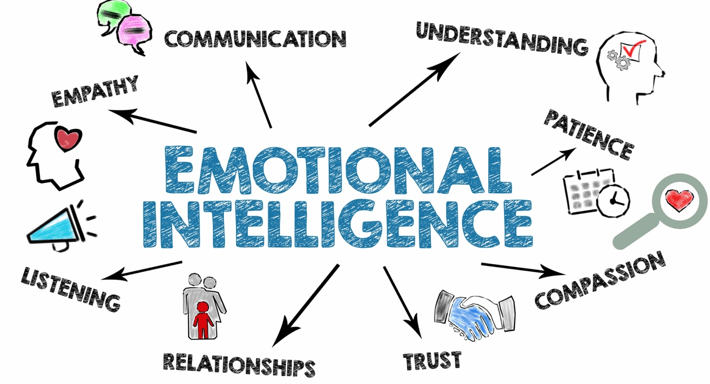
Decades of organisational psychology research point to a sobering truth. Leadership effectiveness is less about how smart a leader is and more about how well that intelligence is translated into relational impact. Emotional Intelligence, or EQ, is not a soft add-on. It is the operating system that determines whether intelligence compounds or corrodes influence.

The smartest person in the room often assumes clarity equals alignment. This is the first trap. High-IQ leaders are trained to value precision, speed, and correctness. In technical domains, these traits are rewarded. In human systems, they can become liabilities.
Common patterns emerge:
- Over-optimisation of logic at the expense of emotion
- Impatience with ambiguity, dissent, or slower processors
- Low tolerance for what feels inefficient, such as emotional check-ins or narrative framing
- Unconscious signalling of superiority through tone, pace, or dismissal
Daniel Goleman’s foundational research on Emotional Intelligence demonstrated that while IQ predicts entry-level success, it explains very little variance in long-term leadership effectiveness. What differentiates top-performing leaders is the ability to manage themselves and others under pressure, uncertainty, and emotional load.
Gallup’s global engagement data reinforces this gap. Managers account for at least 70 percent of the variance in team engagement, and the strongest predictor of engagement is not technical competence, but how employees feel treated, heard, and understood.
High-IQ leaders often misread disengagement as incompetence or resistance, when it is more accurately a relational signal. People do not disengage because leaders are too smart. They disengage because they feel unseen, unsafe, or unheard. This is not a people problem. It is a leadership operating system failure.
Emotional Intelligence governs how information is delivered, how decisions are received, and how power is experienced. It shapes the emotional climate in which performance either expands or contracts. Rather than framing EQ as a personality trait, high-performance leadership treats it as an internal system with four core capabilities. Together, these form The EQ Advantage™ Framework.
The EQ Advantage™ Framework
- Self-Awareness
Self-awareness is the ability to perceive one’s impact on others in real time. High-IQ leaders often know what they intend. Self-aware leaders know what actually lands. This includes awareness of:
- Tone under pressure
- Non-verbal signals such as pace, posture, and facial expression
- Emotional leakage during stress or fatigue
- Patterns of defensiveness or dismissal
Neuroscience shows that humans constantly scan leaders for emotional cues. When leaders lack self-awareness, teams compensate by self-censoring, withdrawing, or mirroring anxiety.
Self-aware leaders actively ask:
- What emotional state is being projected right now?
- How might this message be received, not just understood?
- What is the impact, not just the intent?
Without self-awareness, intelligence becomes blunt force.
- Emotional Regulation
Emotional regulation is a leader’s ability to stay steady under pressure and prevent personal stress from spilling into the team. When leaders react impulsively, withdraw, or communicate sharply during moments of strain, the organisation feels it immediately. Meetings become tense. People hold back. Energy shifts from problem-solving to self-protection.
Leaders who struggle to regulate themselves do not intend to create fear or volatility, but it happens quietly. Teams begin to anticipate mood rather than direction. They manage emotions instead of executing priorities.
By contrast, regulated leaders create calm even in uncertainty. Their consistency signals safety. Their composure allows others to think clearly, speak honestly, and stay focused on performance rather than survival.
Emotional regulation is not about suppressing emotion. It is about leading without letting pressure dictate behaviour.
Emotionally regulated leaders demonstrate:
- Composure under ambiguity
- Consistency under pressure
- The ability to pause before responding
- Recovery after setbacks without emotional spillover
Research in neuroscience confirms that regulated leaders keep teams cognitively online. Psychological safety increases when leaders remain steady, predictable, and calm. Burnout cultures are rarely created by workload alone. They are created by emotional volatility at the top.
- Empathic Authority
Empathic authority is the ability to lead with clarity while staying aware of the emotional climate in the room. It allows leaders to give direction, make difficult decisions, and hold standards without disconnecting from the people expected to deliver.
This shows up in how tough calls are made, how pressure is acknowledged without lowering expectations, and how leaders listen carefully while remaining anchored in authority. Emotional realities are recognised, but they do not hijack judgement or momentum.
Teams perform best when people feel able to speak honestly and contribute without fear of embarrassment or dismissal. That sense of safety is created through consistent leadership behaviour, not formal processes or slogans.
When authority is combined with empathy, strength is communicated without intimidation. Commitment replaces compliance, and trust becomes a performance advantage.
Leaders who struggle in this area are often admired for their capability, but they rarely generate the depth of followership required for sustained results.
- Behavioural Adaptability
Behavioural adaptability is a leader’s capacity to adjust how they communicate without diluting who they are. It is the skill of meeting people where they are while keeping direction clear and intent intact.
In practice, this means recognising that individuals process information differently and that influence depends as much on delivery as on content. Effective leaders pay attention to cognitive differences, cultural context, emotional load, and the power dynamics present in any interaction.
When leaders adapt their approach, messages land more clearly, resistance lowers, and alignment accelerates. People engage not because they are persuaded by intellect alone, but because they feel understood.
Research consistently shows that teams perform at their best when leaders respond to individual motivators and communication preferences. Adaptability, when done well, strengthens credibility rather than weakening it.
Leadership reach is constrained when intelligence is delivered through a single lens. It expands when leaders know how to translate insight across diverse audiences.
Leadership shapes how people feel long before it shapes what they do. Teams read tone, consistency, and presence constantly, adjusting their behaviour to match what they experience at the top. When pressure dominates leadership behaviour, thinking contracts and caution takes over. When steadiness is visible, people remain open, focused, and willing to engage.
This is why influence is never carried by intellect alone. It moves through emotional consistency, trust, and the signals leaders send when decisions are difficult and stakes are high. In complex, people-dependent environments, those signals matter more than technical brilliance.
Intelligence may open doors, but it does not determine how far a leader goes once inside. Technical excellence earns credibility. Emotional intelligence determines whether others choose to follow.
The most dangerous leadership blind spot is the belief that being right is enough. Leadership is not about being the sharpest voice in the room. It is about creating the conditions where others can think clearly, contribute fully, and commit without fear.
Influence begins when leaders master how they show up and speak.
Dzigbordi Kwaku-Dosoo is a Ghanaian multi-disciplinary Business Leader, Entrepreneur, Consultant, Certified High-Performance Coach (CHPC™) and global Speaker. She is the Founder and CEO of The DCG Consulting Group. She is the trusted coach to top executives, managers, teams, and entrepreneurs helping them reach their highest level of performance through the integration of technical skills with human (soft)skills for personal development and professional growth, a recipe for success she has perfected over the years. Her coaching, seminars and training has helped many organizations and individuals to transform their image and impact, elevate their engagement and establish networks leading to improved and inspired teams, growth and productivity.
Provided by SyndiGate Media Inc. (Syndigate.info).
Post a Comment for "Insights with Dzigbordi Kwaku-Dosoo: Why high-IQ leaders still struggle with people"